
Cheque Bounce: Legal Remedies, Procedure, Causes and Importance of Timely Action
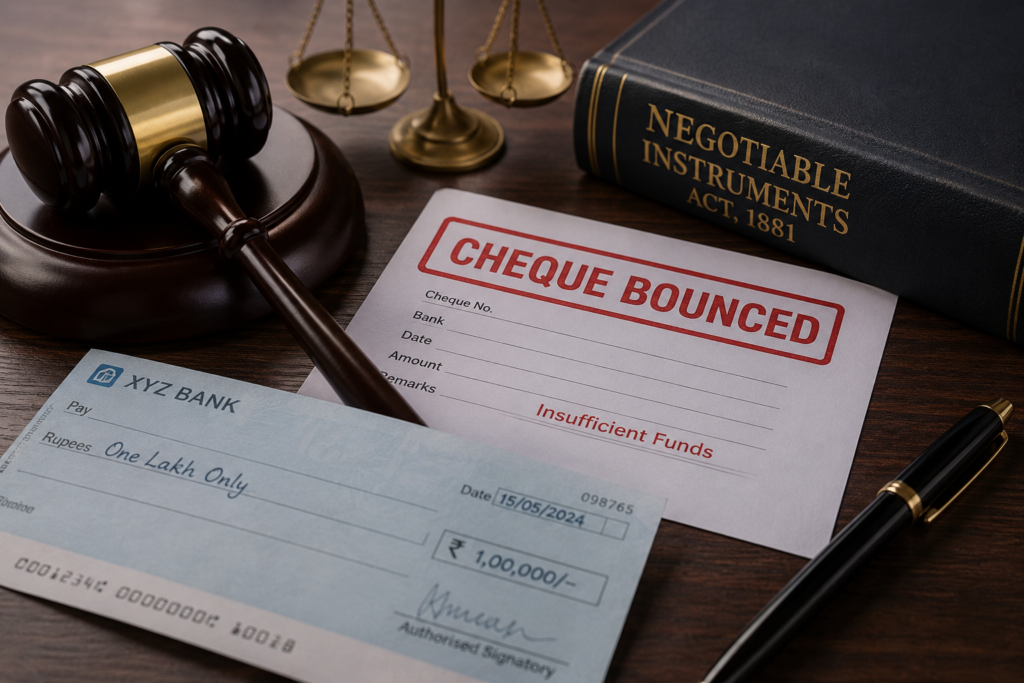
A cheque is one of the most commonly used instruments for making payments in business and personal transactions. It provides a convenient way to transfer money without requiring immediate cash payment. However, when a cheque is presented to the bank and is returned unpaid, the situation can become legally and financially complicated. A cheque bounce […]
Cheque Bounce in India: Legal Remedies, Penalties & Expert Legal Assistance

A cheque is one of the most commonly used financial instruments for business transactions, loan repayments, rent payments, and commercial dealings. It represents a promise that the issuer has sufficient funds in their bank account to honor the payment. However, when a cheque is returned unpaid by the bank due to insufficient funds or other […]
Cheque Returned Unpaid? Understand the legal rights and actions to take if they are breached.
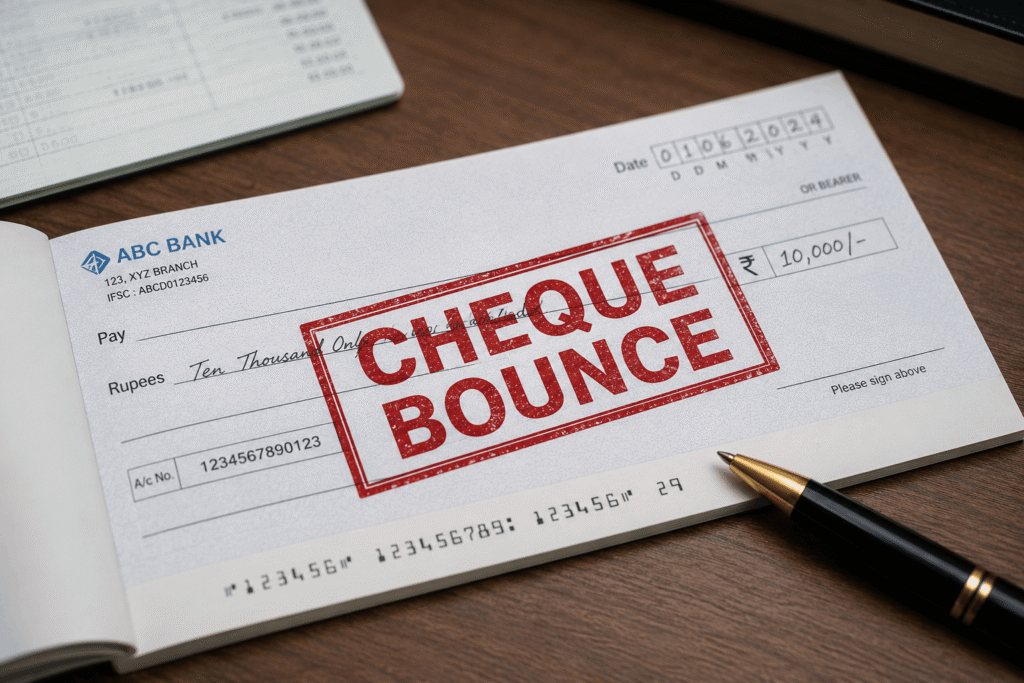
One of the most frequently used financial instruments in business transactions, loan payments, rent payments and personal transactions is a cheque. But a bounced cheque may lead to financial difficulties and legal problems for the issuer and the recipient. On the other hand, the cheque bounce cases in India are governed by primarily by […]
Cheque Bounce Cases in India: Legal Remedies, Penalties, and Recovery Process
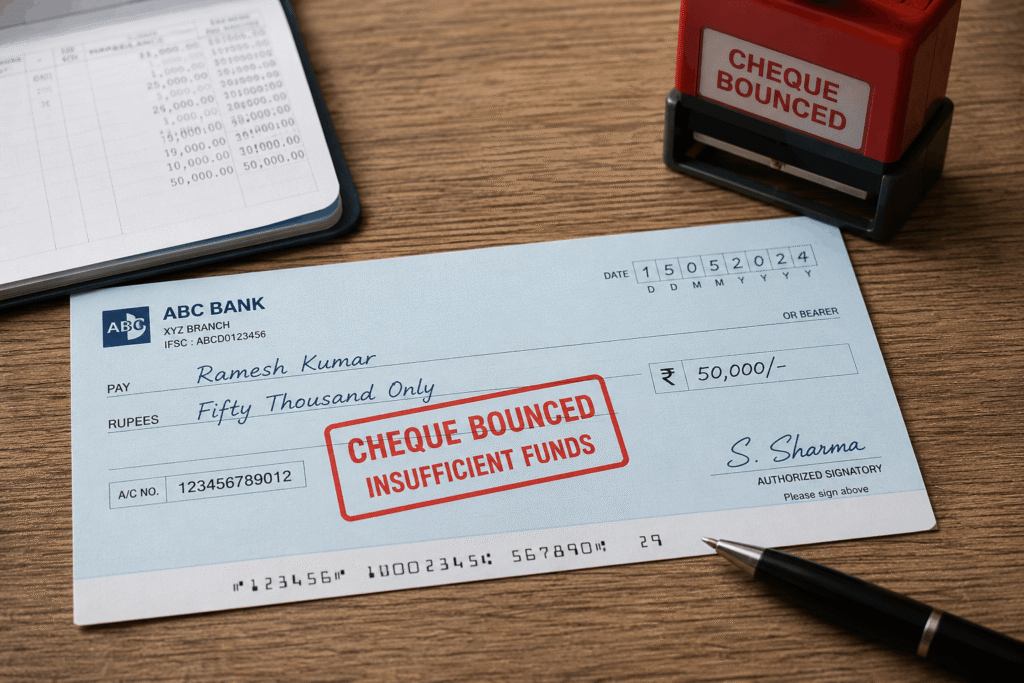
Cheque Bounce Cases in India: In today’s fast-paced financial environment, cheques continue to be a commonly used mode of payment for both personal and business transactions. However, when a cheque is dishonoured by the bank due to insufficient funds or other valid reasons, it can lead to serious legal consequences. Commonly referred to as a […]
Cheque Bounce Under Section 138 NI Act: Everything You Need to Know
Cheque bounce cases are among the most common financial and legal disputes in India. Whether it is a business transaction, personal loan repayment, partnership dealing, or payment for services, a dishonoured cheque can create serious financial complications for both parties. To protect the credibility of cheque transactions and maintain trust in the banking system, the […]
Cheque Bounce Due to Insufficient Funds: Legal Consequences Explained

A cheque bounce due to insufficient funds is one of the most common financial disputes faced by individuals, businesses, traders, and companies in India. When a cheque issued by a person or organization is dishonoured by the bank because the account does not contain adequate balance, it can lead to serious legal and financial consequences […]
Cheque Bounce in India: Legal Meaning, Causes, Procedure and Remedies

Cheque bounce is one of the most common financial and legal issues faced by individuals and businesses in India. It occurs when a cheque presented to the bank for payment is dishonoured or returned unpaid due to insufficient funds or other valid reasons. Cheque bounce cases are serious because they affect trust in financial […]
Cheque Bounce: Legal Implications, Process & Remedies in India
Cheque bounce, also known as dishonour of cheque, is one of the most common financial and legal issues faced by individuals and businesses in India. It occurs when a cheque presented to the bank for payment is returned unpaid due to various reasons. This not only affects financial transactions but can also lead to serious […]
Cheque Bounce in India: Legal Action, Penalties & Complete Process Guide

Cheque bounce, also known as dishonour of cheque, is a common financial and legal issue in India that can lead to serious consequences if not handled properly. Governed under Section 138 of the Negotiable Instruments Act, 1881, cheque bounce cases are considered criminal offences and can result in penalties, fines, or even imprisonment. Understanding […]
Cheque Bounce Disputes: Legal Framework and Practical Solutions

Cheque bounce disputes are among the most common financial and legal issues in India, affecting individuals, businesses, and financial institutions alike. A cheque bounce, also known as dishonour of cheque, occurs when a bank refuses to process a cheque due to insufficient funds, signature mismatch, account closure, or other technical reasons. To address such […]